


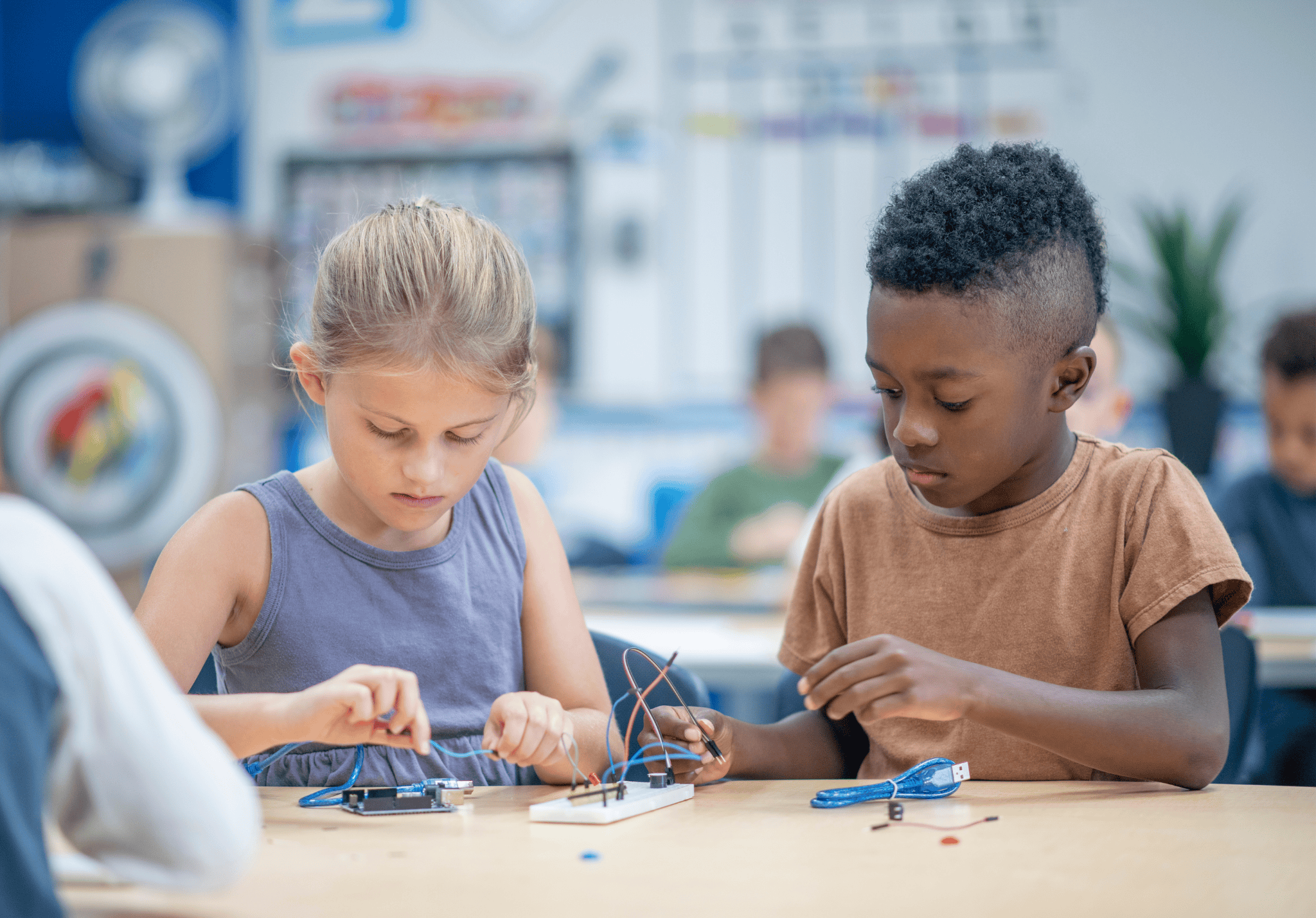
Early learning shapes the curious young mind. Hands explore objects and ideas through playful discovery. Young learners ask questions about patterns and motion. Simple experiments guide young minds toward deeper understanding. Now curiosity grows when playful exploration meets thoughtful guidance.
STEM activities help children observe change and cause. Young learners notice shapes and textures during playful experiments. Teachers guide observation with calm patient instruction. So active learning environments support strong reasoning development in growing learners.
Building Curiosity Through Hands-On Exploration
Hands-on exploration encourages deep attention and observation. Children touch magnets water and simple machines. Curious minds watch movement and small reactions carefully. Sometimes a small experiment reveals surprising patterns in nature. Young learners enjoy discovering answers through careful observation and playful effort.
Classrooms use building blocks gears and ramps. Each object invites questions about motion and balance. The learner compares shapes weights and movement. So thoughtful activities slowly guide reasoning and logical thinking development. Exploration also supports language growth through descriptive conversation about materials and results. Creative programs such as Mission.IO sometimes inspire educators to design engaging STEM missions for young learners. The experience blends storytelling exploration and thoughtful problem-solving activities.
Encouraging Problem Solving Through Simple Experiments
Simple experiments build patience and structured thinking habits. A young learner predicts outcomes before observing results. Prediction encourages thoughtful attention during each experiment. Now prediction and observation together strengthen analytical reasoning abilities.
Teachers introduce activities with magnets light or floating objects. Each activity reveals relationships between movement force and simple physics ideas. The learner observes small changes during every step. Sometimes unexpected results encourage deeper reflection and discussion in the classroom.
Many educators also design critical thinking activities for kindergarten students using puzzles experiments and collaborative challenges. Such tasks guide reasoning through gentle questioning and shared observation. Mission.IO learning environments sometimes integrate similar storytelling driven experiments that promote teamwork and discovery.
Strengthening Logical Thinking Through Building Challenges
Building challenges encourage structured reasoning and careful planning. Children construct bridges towers and moving pathways. Each design reveals ideas about balance and stability. So repeated building attempts strengthen persistence and thoughtful planning habits.
The learner studies shape placement during construction tasks. Small adjustments reveal stronger structures and smoother movement. Sometimes a structure collapses and invites thoughtful redesign. The learning process slowly builds patience and careful observation skills. Educators guide reflection after each construction activity. Children describe what worked and what failed during the process. Mission.IO learning experiences often model similar reflective exploration through interactive missions and science themed challenges.
Conclusion
Playful experiments guide observation prediction and thoughtful reflection. Young learners explore patterns through building experiments and nature discovery. Sometimes a simple activity inspires a lasting interest in science learning. Supportive educators design environments where exploration feels safe and exciting.
