


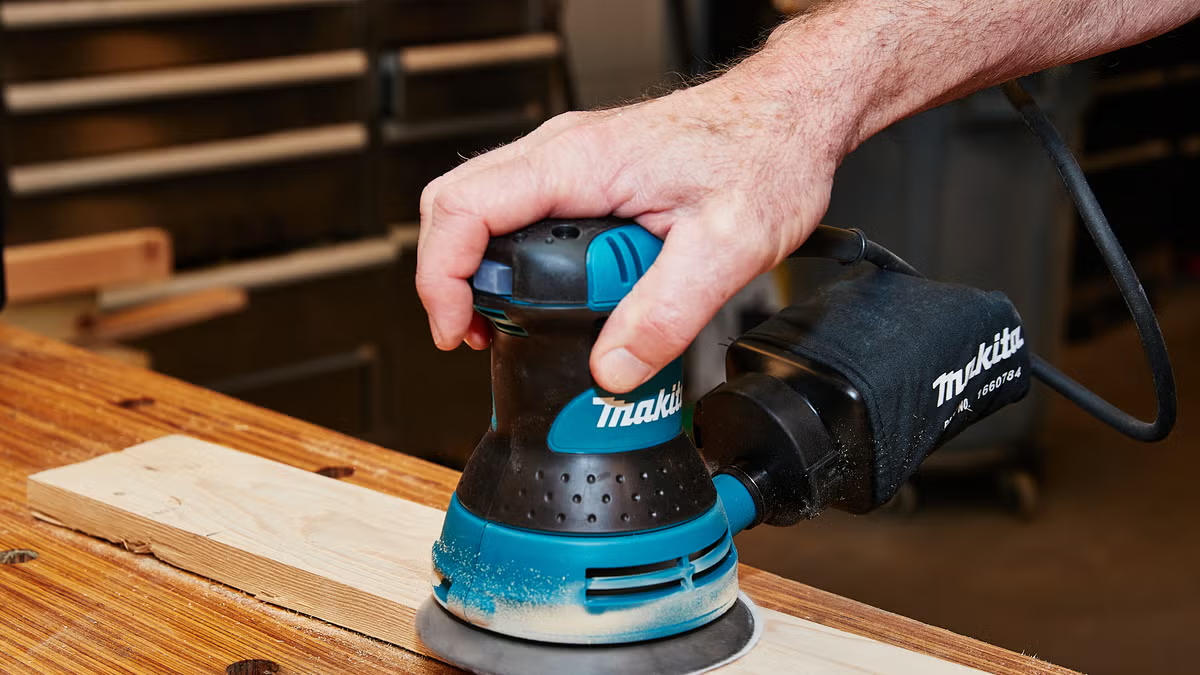
The detail sander market spans a wide price and quality range, and the differences between options at different price points are not always obvious from specifications alone. Motor power figures, orbital speed ratings, and pad size comparisons give some indication of relative capability, but the characteristics that matter most in actual use — vibration management, ergonomics, dust extraction efficiency, and accessory system quality — are harder to assess without hands-on evaluation.
This guide covers the considerations that matter most for buyers at different levels of experience and frequency of use, helping narrow the field to options that genuinely match the work requirements rather than simply the budget.
Defining Your Use Case
The right detail sander for occasional light home improvement projects is different from the right tool for a professional furniture restorer who uses their detail sander for several hours daily. Motor longevity under sustained use, ergonomic design for extended sessions, and the availability of replacement accessories and parts are all factors that matter more as use intensity increases.
For regular, sustained use, investing in a tool with a quality motor and a well-designed ergonomic body pays dividends in both productivity and comfort. A HoZo detail sander from HOZO is designed with this use intensity in mind — the build quality reflects the expectation of regular demanding use rather than occasional light tasks.
Variable Speed and Its Practical Value
Variable speed control is one of the most practically useful features on a detail sander. Different materials respond best to different orbital speeds — softer woods and delicate surfaces benefit from lower speeds that reduce the risk of burning or leaving visible marks, while harder materials and initial removal passes benefit from higher speeds that increase material removal rate.
The ability to dial in the appropriate speed for each task also allows the same tool to be used effectively across the full sanding sequence — from coarse abrasive removal passes at higher speeds through to fine finishing work at lower speeds — without needing to manage the abrasive aggressiveness purely through grit selection.
Pad System and Accessory Availability
The hook-and-loop pad attachment system that most modern detail sanders use is convenient and quick for abrasive changes, but the quality of the hook-and-loop surface and the stiffness of the pad backing affect how well the abrasive follows contoured surfaces. A stiffer pad produces better results on flat surfaces but less effective surface following on curved profiles. Some tools offer multiple pad stiffness options for this reason.
The NeoSander Premium Combo includes multiple pad profiles that address this variability — different profiles for flat areas, corners, and tight curves allow the tool to be optimised for each surface type encountered rather than applying a single compromise solution to all situations. Ongoing accessory availability is also worth checking before committing to a tool — a system with limited aftermarket support can be frustrating when replacement abrasives or alternative profiles are needed.
Dust Extraction Considerations
Effective dust extraction during detail sanding keeps the work surface visible, reduces airborne dust in the workspace, and extends abrasive life by preventing clogging. The extraction design on a detail sander needs to draw from the pad area effectively despite the small pad size and the often-confined spaces where the tool is working.
Tools with better extraction design maintain surface visibility better during continuous use and produce less airborne dust in the work area. For anyone sanding in enclosed domestic spaces where dust management is a priority — or working with materials where fine dust is a health consideration — this is a genuinely important performance characteristic rather than a secondary specification.
Making the Purchase Decision
The most practical approach to detail sander selection is to match the tool’s capability to the most demanding regular use case it will face, rather than buying to the minimum specification adequate for light tasks. A tool that meets the demands of the most challenging work encountered also handles lighter tasks well. The reverse is not true — a tool adequate for occasional light use often disappoints when used more intensively or on more demanding materials.
For buyers who do meaningful detail sanding work regularly, the investment in a quality tool like the HOZO NeoSander Premium Combo pays for itself through productivity, consistency of results, and the extended service life of a tool built for sustained use.
